Measuring and layout · 3 min read
How to Check Hand Clearance on a Shooting Board
Where can you secure a shooting board without blocking the plane or your hand?
Offcut Journal editorialUpdated
Short answer
A shooting board guides a hand plane on its side. The important outline on the bench includes the grip, the hand holding the board's workpiece, the handle of any hold-down and the end of the plane's travel. A dry layout with the blade fully removed lets you examine the available space before working.
At the bench
Map the whole plane at both ends
On a stable bench, put the shooting board and plane in their working orientation, with the plane blade fully removed. Use paper beside the track to mark where the sole, nose and handle project when the plane is at the start, when it crosses the fence and when it finishes its stroke. If the rear handle swings wider than the sole, use the handle as your outer reference for that area.
Try the bench attachment in place
Fit your intended hold-down or position the board against its bench hook. Turn the vise handle through its actual range and include the hardware below or beside the bench top. A fixed clamp pad that clears the plane can still have a bar that crosses the outside hand path. If a handle swings through the marked outline, change the board or hold-down position and update the layout on the bench.
Include the stock and the second hand
Set the longest typical piece and a shorter representative piece against the fence in separate dry setups. Check where your supporting hand naturally lands, including when reaching over a wide piece. Keep it out of the plane path. Stock that extends off the deck may need stable support at the same height. Mark where that support would sit so you can see whether it competes with a clamp, the track or your own stance.
Leave room to work from the actual stance
Stand wherever you can comfortably reach the track through the full dry movement. If your grip has to open around a bar or the plane tips outward to clear a clamp, the layout needs space on that side. Move the board closer to the working edge, reverse the clamp orientation where the bench permits, or reserve a different station. Test both the new position and underside clearance before you record the board's location.
Check the bench itself below the projection
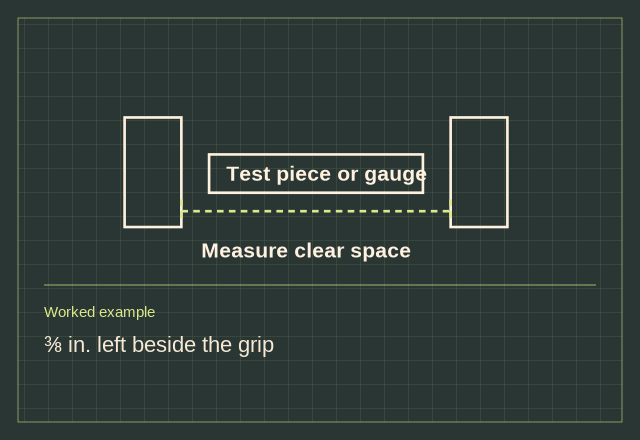
The plane grip projects ⅞ in. beyond the board and the vise handle leaves ⅜ in. near one position. With the blade removed, move the plane through its intended track once while sighting where your knuckles pass the bench edge. An apron or drawer handle lower down can take up hand room even if the grip and vise bar clear in top view. Draw a short end view with the bench rail and the hand position at the tightest point. If you move the board to create clearance underneath, check that its hook or hold-down still seats fully and the stock stays supported at the far end.
Practice on a plan
Finished dimensions in width × depth × height order.