Sanding and finish · 2 min read
How to Care for a Finished Wood Project by a Window
How should I look after a finished wood project that sits by a bright window?
Offcut Journal editorialUpdated
Short answer
Work out how the display will be exposed before choosing a treatment. Sunlit wood and the finish on it may change appearance over time. Put together a simple observation routine, and use the maker’s care guidance before cleaning or adding a new coating.
At the bench
Map the strongest exposure
Look at the surface at a couple of ordinary times, and note where the direct light falls. On a postcard holder, the front rail may get direct light while the bottom remains shaded. For a plant tray, include the glass and the things it holds, since their positions change the light pattern and how easy it is to see trapped moisture.
Separate appearance from upkeep
Check the finish instructions for intended environment and routine care. Decide what change you can live with before buying anything else. Gradual changes may be acceptable on an everyday project. If keeping the visible tone is important, try a different position on the sill or shift the whole piece to a suitable spot that gets less direct light.
Keep a record you can compare
Take a baseline photo of the project with its contents off, using a light and camera position you can reproduce later. Use a date rather than trying to remember the first hue the wood had. Check the sheltered and exposed patches in that same light. At each check, clean only as the finish maker directs, and make sure any plant setup has an accessible way to contain drips.
Decide where it will stay
If the piece stays by the window, make inspection easy. Arrange objects so you can lift them without dragging on the coating. Check underneath after any heavy watering, and move the tray to a dry place if the setting regularly traps moisture. The maintenance choice may be as simple as a better position and a saucer you can easily remove.
Compare the covered and uncovered surfaces before moving the display
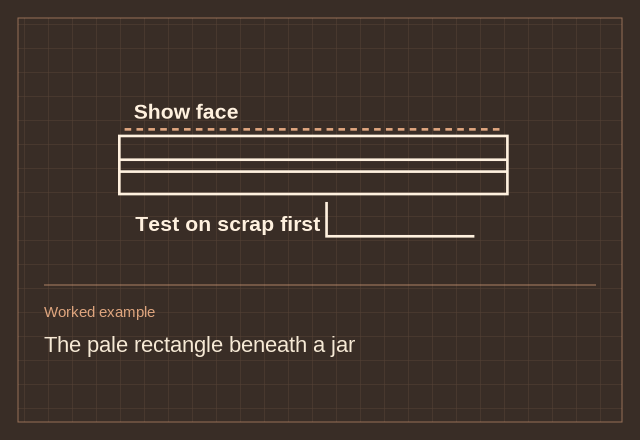
If a pale rectangle appears near the window, check whether it follows a printed card or a saucer and whether the exposed wood is different on all sides. Compare the wood in neutral room light after removing the contents. A color change that follows the object’s exact footprint can help you find a likely shading boundary. A line from the frame of the window may extend past the protected spot into the surrounding surface. If the object contacts the wood and the finish looks cloudy or feels different there, consult the finish maker’s care guidance before trying to even out the tone.
Practice on a plan
Finished dimensions in width × depth × height order.
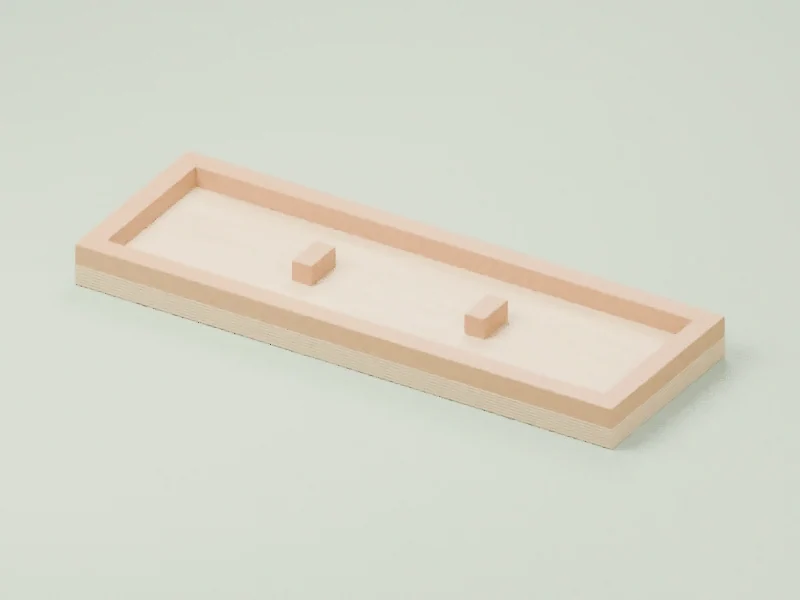 Narrow Windowsill Tray for Three Herb PotsFinished size · 20¼ × 7 × 1½ in.
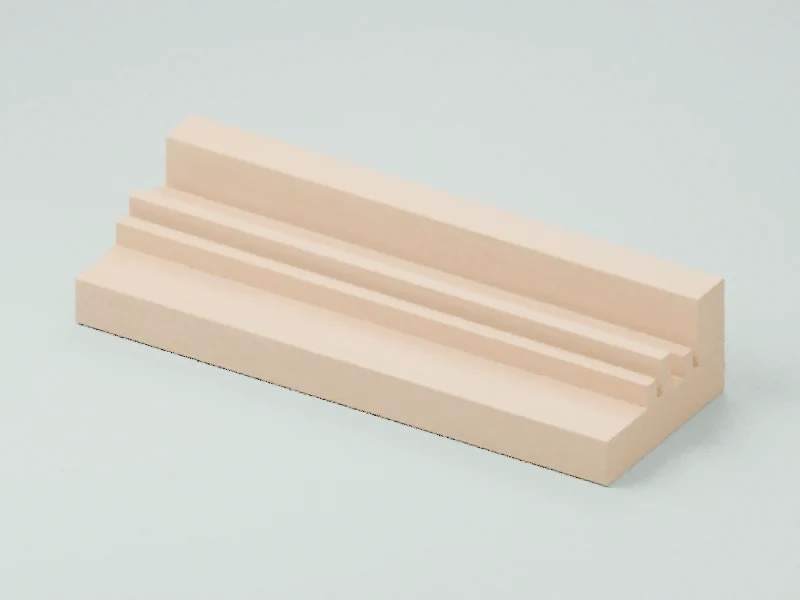 Two-Row Wooden Display Stand for 4 × 6 PostcardsFinished size · 9 × 3¼ × 1⅞ in.