Fasteners and glue · 2 min read
Wood Screw or Machine Screw for a Removable Wood Stop?
Which fastener should hold a wood stop I plan to remove regularly?
Offcut Journal editorialUpdated
Short answer
Choose the fastening method after you decide how often the stop will come off. A wood screw suits a part that occasionally needs fresh stock. A machine screw needs matching metal threads such as a threaded insert or an accessible nut. On a small fixture, the space for that metal hardware can make the decision before you consider anything else.
At the bench
Decide what wears out
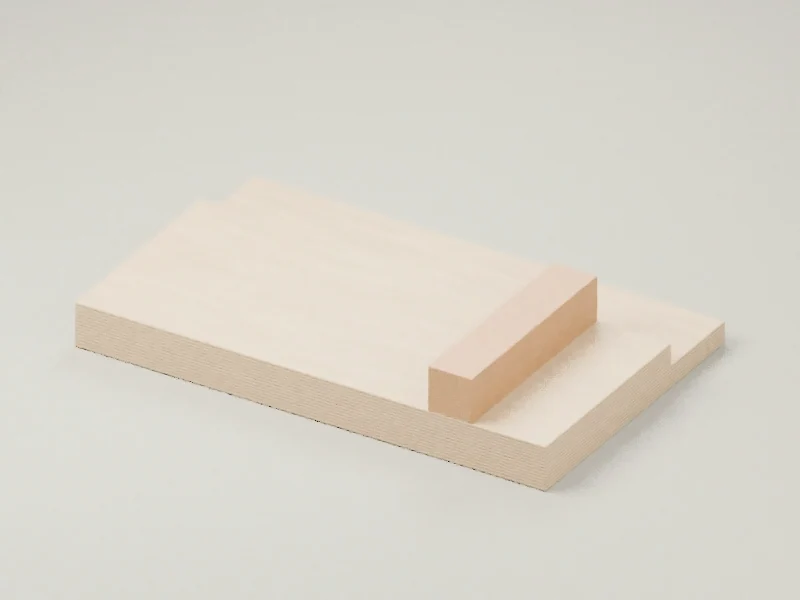
On a shooting board, the replaceable stop can get cut and trimmed many times during the fixture’s life. Plan that the small part may need to come off while the main deck stays intact. For a stop you expect to change rarely, a simple screw that follows the drawing may be the most practical choice.
Think of the metal as its own part
A threaded insert has an outside diameter and a listed installation procedure. Pull those dimensions from the piece of hardware you have. Check the available area around the hole too. Putting an insert in a hole that was drawn for a wood screw can change the remaining wood substantially.
Check both sides of a through bolt
A through bolt can be easier to inspect because the nut stays visible. It needs enough space to hold the nut still and enough clearance for its projecting end. Set the jig on the same table or bench where you expect to use it and notice what touches first.
Keep the locating edge independent
Draw a little reference line along the working side of the stop before you take it off. Use that edge or a dedicated stop shoulder to position its replacement. The screw can then hold the stop down after you have set the part’s orientation and position.
Check what stops a blind screw
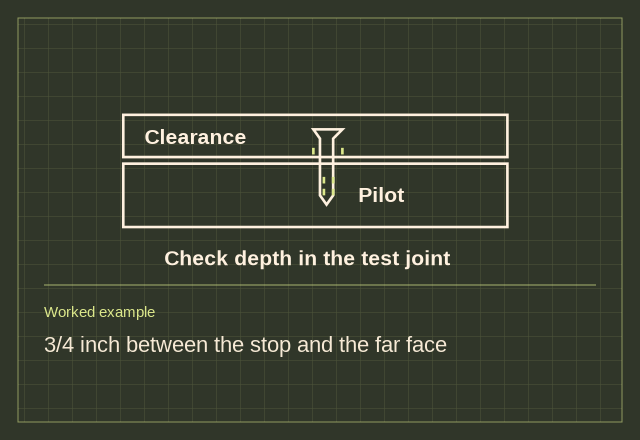
On the sample with ¾ inch of receiving wood, mark where an insert’s usable thread ends. Lay the matching machine screw on that line with its head at the stop’s top surface. A screw that runs out of travel inside the insert can feel tight while the stop is still free to turn. Use the manufacturer’s usable depth and hardware dimensions, since the outside length of the insert may include an unthreaded end. When you test the approved combination, check that the stop seats against its reference face before you judge the feel of the screw. Draw a separate line for the tip so it stays visible on your next replacement.
Practice on a plan
Finished dimensions in width × depth × height order.