Choosing stock · 4 min read
How Much Good Wood Is Left Behind a Split End?
A scrap has a split at one end. How do I decide whether the sound part is long enough for my cut list?
Offcut Journal editorialUpdated
Short answer
Erase the damaged end from your mental tape measure. The piece you found is nineteen inches long. The blank you get to use might start three inches in.
At the bench
Follow the split around the end
Look along both faces, both narrow edges, and the end grain under angled light. Put a removable mark just beyond the last visible trace on each surface. A hairline can disappear on one face and carry farther on the other. Do this on the bench with the piece at rest. Leave stock with loose fragments, deep damage, unfamiliar contamination, or hidden fasteners out of the project rather than trying to make a questionable blank behave.
Reserve room for the first sound end
Plan a trim on the sound side of the farthest visible trace. Choose the actual distance according to the board. There’s no standard extra allowance that makes every split go away. Work from a safely supported blank within the tool maker’s instructions or have the cut made for you. Examine the fresh end before sizing anything. If a line carries into the new end, move your reference and recalculate. Sometimes the shorter project is the one the scrap has left.
Make a one-board cutting budget
Start at a square, clean end beyond the damage and mark the cut lengths from there. Include the material your cuts remove and any square-up at the other end. Place the actual stop, drill hole, or screw position on the layout if it sits near an end. A short sound length may be enough for a spacer. An active split or a questionable section belongs entirely outside a part that will be glued, joined, or fastened. In the example, a final check at the other end could spend some of that 1¼ in. reserve. If you run out, redraw for one rail or find another offcut. Keep the cracked waste apart from pieces awaiting cleanup. CCOHS advises keeping split, defective, or contaminated stock off a woodworking sander.
Check what the crack tells you about the rest
A split can be one symptom of drying and handling, so look at the entire remaining blank before calling it good stock. Sight along the edge. Set it on a reliable flat surface and feel for rock. If the piece stayed in a damp shed, give the sound stock a chance to settle in the shop and recheck it. There’s no point salvaging the length for a pair of rails if the two rails won’t sit flat together.
Recalculate after a second trim
Suppose the first trial trim from the example exposes a hairline at the new end. If another 1½ in. of length has to come off, the board now has 15 in. before you prepare the far end. The full two-part budget was 15¼ in. Even with that far end ready, you’re short by ¼ in. Measure the actual clean length and check that the remaining cut location still falls in sound wood. One rail may fit comfortably. Mark the intended piece instead of starting the old two-rail layout. If a continuous face match matters across both rails, choose a fresh board that yields the whole pair.
Check where you need the sound section to land
A clear strip along one face helps when you’re laying out a pencil rail, but examine all the material that will remain after shaping. The kerf or a later bevel can expose a defect tucked below what appears to be an intact corner. Draw the full rectangular blank, then pencil in the footprints of the holes and mating ends on it. Confirm by inspection that those areas are sound on every accessible face and edge. When a defect leaves you uncertain near an attachment point, move the proposed blank to better material. Hold on to sound stock with reliable dimensions for spacers or trial cuts, and put questionable scraps aside before they end up in the next build.
Check the new end against both matching part outlines
Once you've found a clean end on the 19½ in. scrap, lay both of the 7½ in. part outlines on the same face and carry the outlines around the adjacent edge. One cut might expose a good cross section while knots or runout make the second location unsuitable for a matching rail. If the two blanks are paired, choose both before using the first good interval. Keep the remaining 1¼ in. allowance together until you know whether it is needed at one end. If the second rectangle has to move farther into the board than the remaining length allows, use the original as a setup scrap and find a matched pair before cutting.
Practice on a plan
Finished dimensions in width × depth × height order.
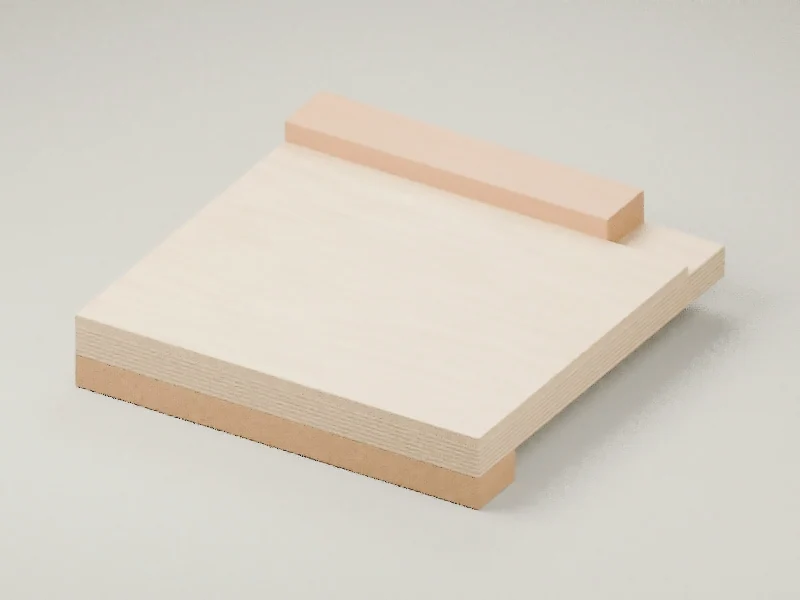 10-Inch Hand Saw Bench Hook with a Replaceable PadFinished size · 10 × 10 × 2¼ in.
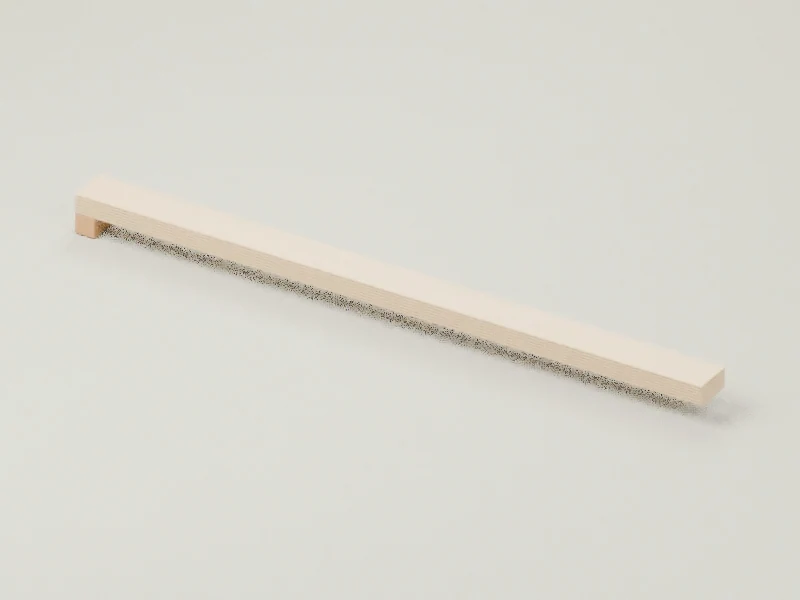 24-Inch Woodworking Story Stick with a Repeat StopFinished size · 24 × 1½ × 1½ in.