Fasteners and glue · 4 min read
How to Use a Backup Board to Prevent Drill Breakout
How do I stop plywood from splintering where my drill bit comes out?
Offcut Journal editorialUpdated
Short answer
Put a flat, expendable piece of wood in direct contact with the exit face and secure both pieces. Drill through the project piece and just into the backer. The backer supports the fibers just as the bit leaves the hole.
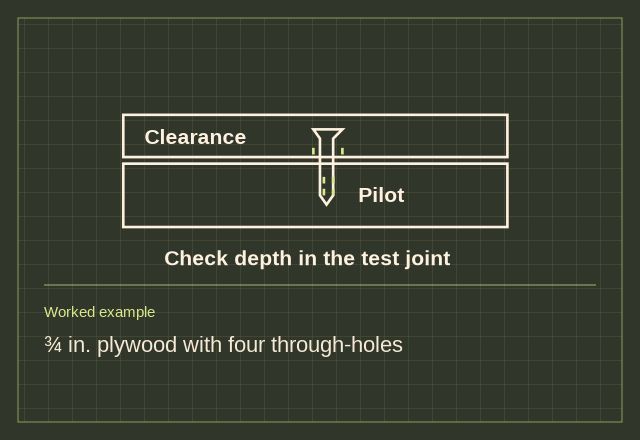
At the bench
Put the backer on the exit face
Decide which side you are drilling from before you position the scrap. The backer goes against the opposite face, directly where the bit will emerge. A piece of wood under the edge of a sheet is useful support for the sheet, but it will leave the exit fibers unsupported if the hole is out in front of it. Use stock thick enough to accept the planned bit travel without reaching the bench or anything else below.
Check that both surfaces touch
Brush away chips and choose a backer with a flat face. A twist, a dried glue ridge, or a hole from an earlier setup can leave a small void directly under the new mark. Set clamps so the layers stay together close to the hole and secure the stack to its work support. Use eye protection and follow the drill's instructions. With a small workpiece, keep it in the clamped setup while you drill.
Support every exit along a row
For a sequence of holes, run a strip of scrap beneath the whole row or reposition a smaller backer for each hole. Check the underside before you place the next mark over an old opening in the strip. Use a bit suited to the hole and ease the feed as the bit reaches the exit surface. When the hole is through, inspect the exit before countersinking or transferring the position. A raised rim can stop a rail from sitting down even if the hole itself is clean.
Distinguish surface damage from a misplaced hole
Look for veneer still attached around the exit. A tiny whisker can often be removed without enlarging the hole. A wide chip near a seating face may need a new location or a replacement piece, according to the plan. If the entry is centered and the exit misses its layout, the bit was likely angled or it wandered. Improve the drill guidance and repeat the trial on scrap, since a backer cannot straighten the path.
Read the shape of the exit damage
If the backing failed under just one side of a through-hole, put the workpiece back on the backer in its original orientation. Look for an old hole that overlaps the new one, a shallow cup in the scrap, or a clamp too far from the cut. A backer that had room to lift can leave part of the exit clean and another part torn out. Rotate the scrap or replace it with a sound section, then check the gap under the workpiece in the secured setup. Repeat with a matching piece before drilling the other holes. Leave the planned location alone if the error came from missing support.
Keep proud fibers away from a seating face
Suppose the hole itself will be hidden, but the exit is where a narrow rail has to sit flat. Lay the rail across the drilled scrap and press at opposite ends to feel for a pivot. Look along its bottom edge. A thin raised rim around the bore may matter more to the fit than a visible chip beyond the contact area. Follow a cleanup method appropriate to the stock and preserve the surrounding contact strip. If the chip extends into that strip or a screw seat, check the plan before accepting the piece. Make a new sample if the mark obscures how the rail will actually meet the floor.
Give the long backer a way to stay flat
A narrow backer strip can tip if its outer edge projects past the floor it supports. Try laying the strip with all four intended holes over solid scrap and checking the stack on both sides of the planned row. Bring the clamps up in the dry setup. If tightening one clamp lifts the opposite edge, change the support beneath the strip or choose a broader backer. Mark the drill entry side and the backer side before turning the test stack over. The clean side of an earlier hole can fool you if you put it back with the unsupported face uppermost.
Practice on a plan
Finished dimensions in width × depth × height order.
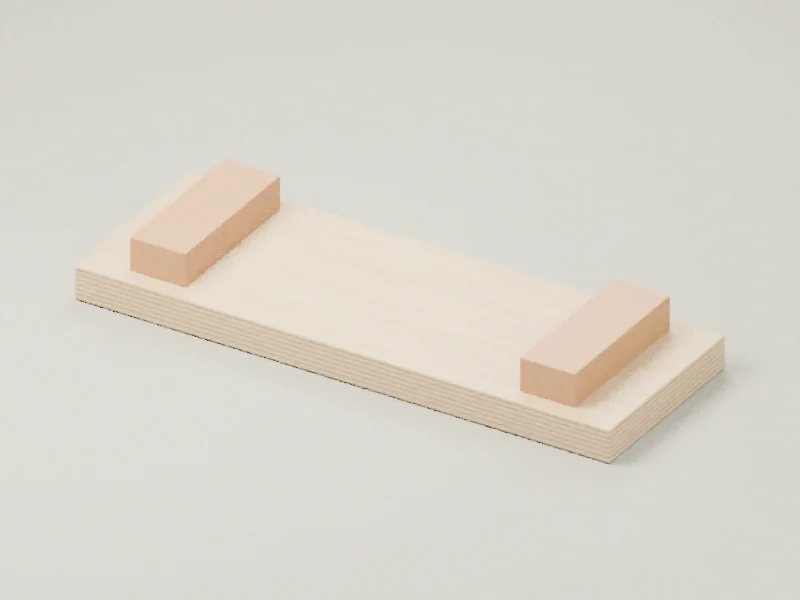 Two-Rail Wooden Rest for a Hand PlaneFinished size · 12 × 4¼ × 1½ in.
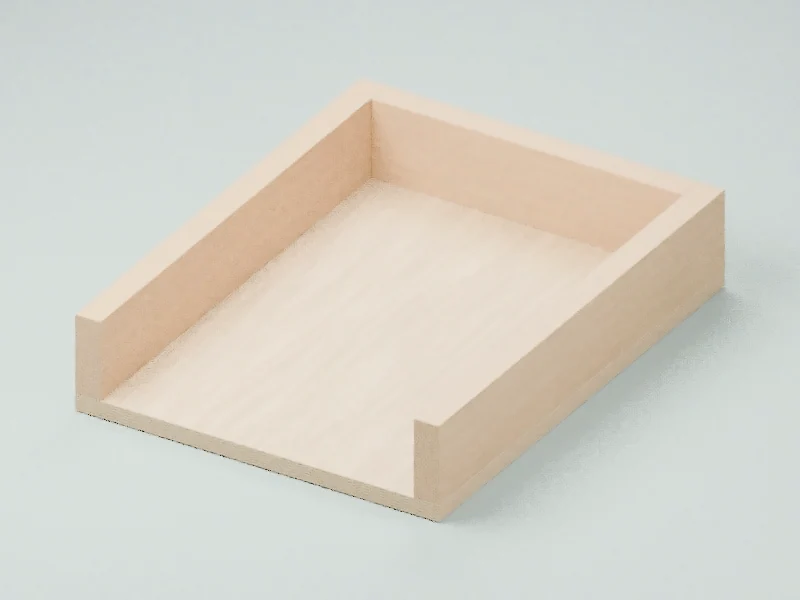 Open-Front Wooden Paper Tray for US LetterFinished size · 10½ × 13½ × 2¾ in.