Fixes at the bench · 3 min read
Why warp threads run diagonally on a frame loom
Why are the warp threads diagonal as soon as I get them on my frame loom?
Offcut Journal editorialUpdated
Short answer
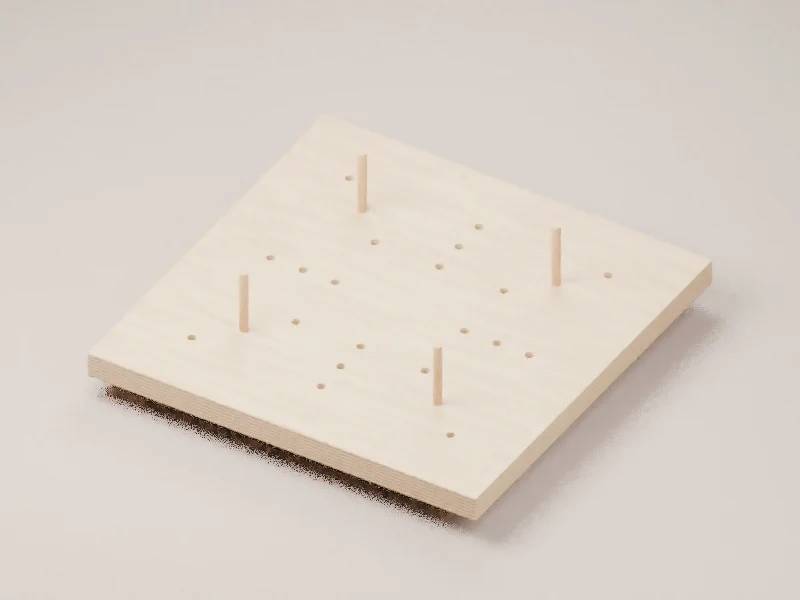
Parallel threads need matching mark positions on the two opposed rows. A single misread index can send the first run sideways and make each later strand look crooked. A frame can also twist and make the rows appear misaligned from one angle. Before pulling the warp any tighter, count from a reference end on both sides and verify the location of a pair of test runs. Use ordinary spare thread for diagnosis.
Find the cause
Identify the same left side on both rows
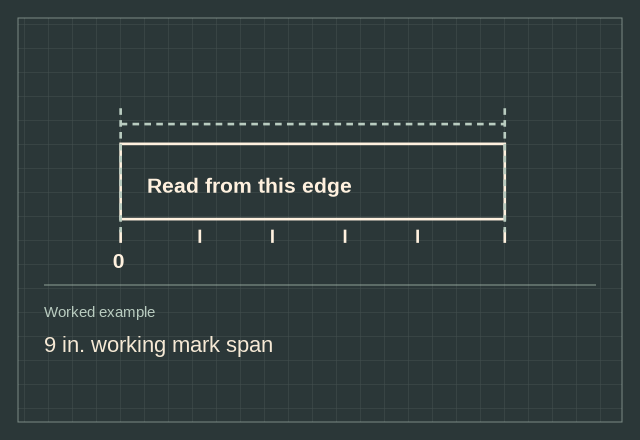
Lay the loom flat and mark the two ends nearest the same side of the frame with paper tape outside the thread path. Number three matching positions at each end on a note. Sight directly down and compare. A rail marked from the other end can show a matching number while occupying a different distance from the corresponding corner.
Lay two test strands away from the edges
Use loose light thread from a matching pair of marks near each end of the usable row. Compare to the frame side with a square or a ruler resting alongside. If one strand tracks straight while the other angles, inspect the pitch across both rows. If both angle the same way, the two rows may be offset as a group, or the frame itself may be out of square.
Check the bare frame before taking anything apart
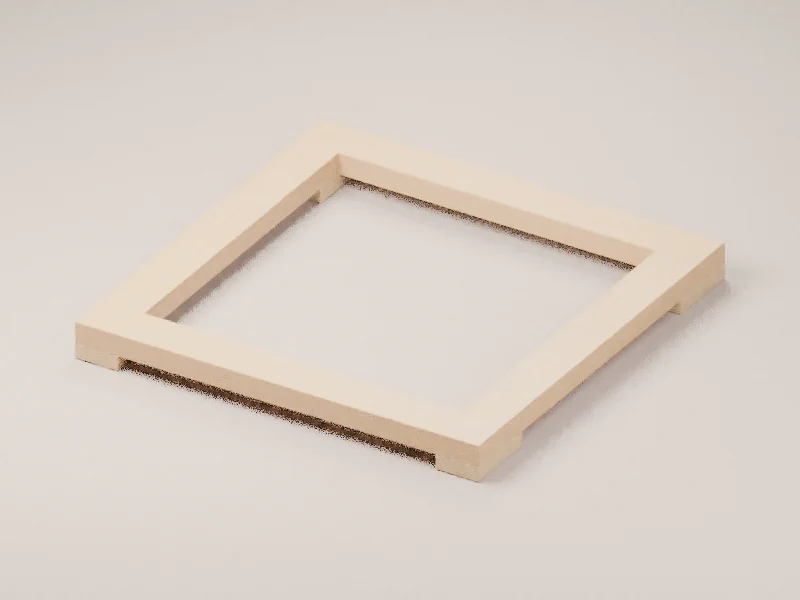
Release the test lines and measure between opposite inside corners on both diagonals. Check that the frame sits on the table without twisting. If one corner lifts clear, compare the diagonal readings on a genuinely flat support. Fix a structural alignment issue before laying out replacement marks.
Record the matched slots you used
Temporarily mark the correct matching pair and use those marks when you warp again. Start near the center and check the route of the next few loops as you work out. Set tension according to your fiber and project and check again before progressing if either row begins to shift or the frame starts to bow.
See whether the yarn is crossing one rail mark on the back
Once two bare test strands run straight, follow a spare yarn around the normal turn at the back of each rail. A loop can enter at the right mark and return through its neighbor if the back of the row is out of sight. Look at the frame from the side and count the return points as a separate check. If the crossing starts behind the rail, trace each loose loop back to its first mismatch before tying or tightening. Use the same edge as the starting reference when you put the loom down again. A new row of marks cannot correct a misrouted loop.
Practice on a plan
Finished dimensions in width × depth × height order.