Sanding and finish · 2 min read
How to Keep Stained End Grain From Looking Too Dark
How can I keep the ends of a stained wood project from turning much darker than the face?
Offcut Journal editorialUpdated
Short answer
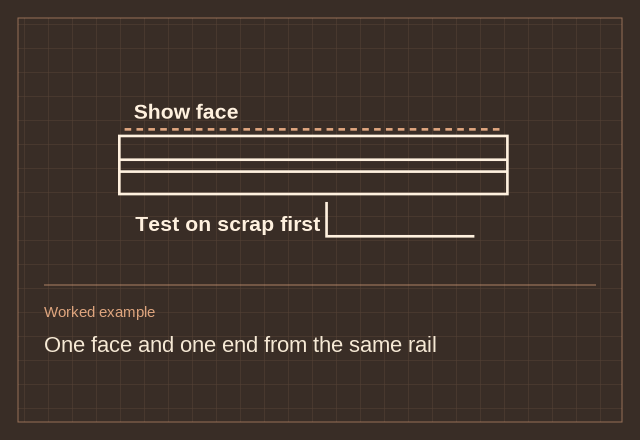
Sample both the end and the broad face before choosing a color. Use the actual project wood and apply the same finish schedule you are considering. Decide how much contrast belongs in the design while you can still change the sample.
At the bench
Start with an end that looks like your finished cut
Inspect the crosscut under a lamp. A polished saw mark, a ragged corner and a compressed patch may all change how the end looks under stain. Prepare the offcut’s end exactly as you intend to prepare the rails. Hold it in its assembled position, with the face on top and the end toward you. The parts often tell a different color story once they stand up.
Keep one reference end untouched by the experiment
Finish a reference offcut using your normal prep and the label’s schedule. Change one variable on another end, such as an approved conditioner or a lighter compatible stain. Record which one you altered. Wait through the product’s stated stages before judging. A dark wet mark and the color you will see under a clear topcoat are two different observations.
Compare at an actual corner
Hold the sample against the other material it will touch. In a plywood-and-solid tray, the solid end can look strong on its own and visually heavy against the panel. Put the corner against the backdrop where the tray will live. A little end definition can help the construction read. Choose a quieter contrast if the ends would take attention away from the piece.
Carry the chosen preparation to every visible end
Mark the ends that will remain visible after assembly. Make the prep repeatable across the left and right rail. Apply any compatible pretreatment on the schedule given for the system. Keep end-grain treatment off adjacent show faces unless you tested that blend too. Save a labeled offcut so you can repeat the color on a replacement part.
Judge a pair of ends together before changing color
A dark end can be attractive when two rails show matching ends at the same corner. It is harder to judge when the test is just one end against a wide field. Make a mock corner from two neighboring rail scraps, with the show faces set the way they will meet. Mark the front on each underside. Compare the cured corner in the planned room and check whether one end reads as an accent while the other reads as a stain mistake. If the difference follows the grain, rearranging or replacing one visible rail may be more predictable than blending two different treatments.
Practice on a plan
Finished dimensions in width × depth × height order.
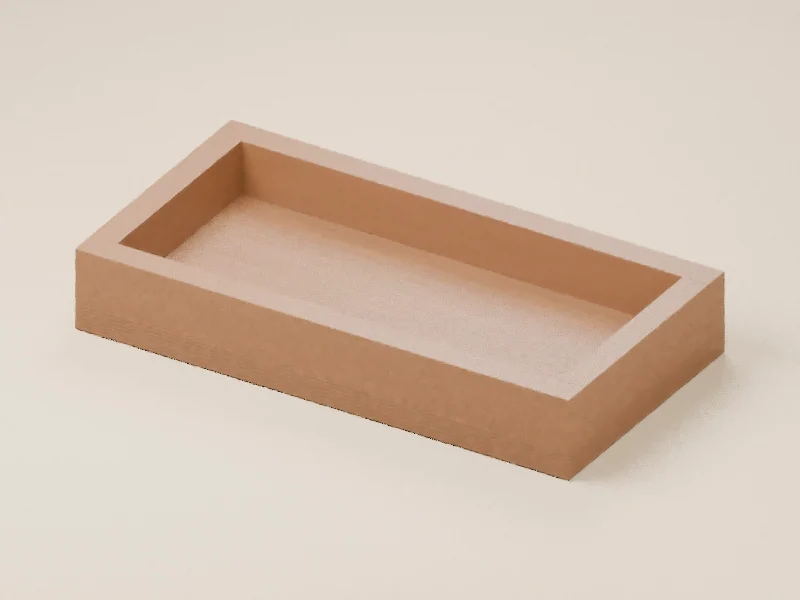 Walnut Valet Tray from Square-Cut RailsFinished size · 14 × 7¼ × 2¼ in.
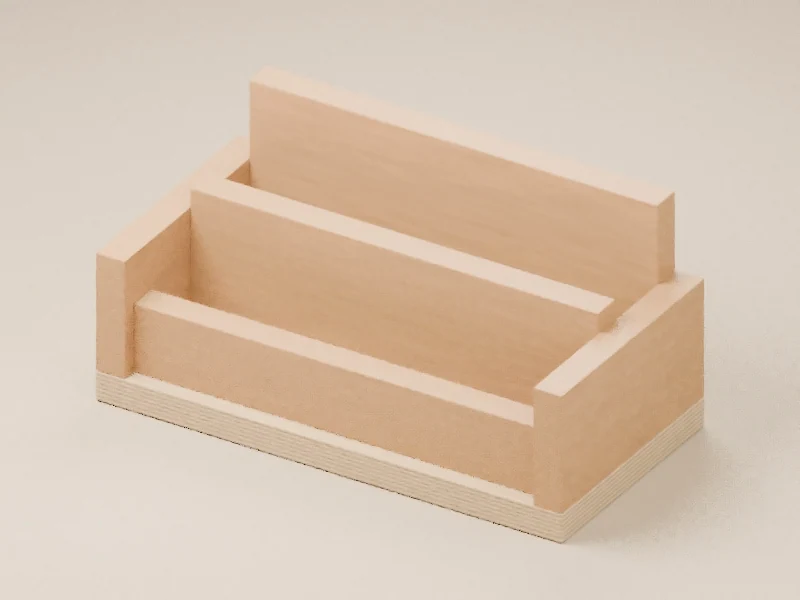 Two-Slot Wooden Mail Sorter for a CountertopFinished size · 12 × 6 × 5¾ in.