Sanding and finish · 2 min read
When a Pre-Stain Conditioner Helps With Blotching
Should I use pre-stain wood conditioner to keep my wood from blotching?
Offcut Journal editorialUpdated
Short answer
Use a pre-stain conditioner when a trial shows that it evens out the color and is compatible with the intended stain. Work in matched sample pairs, because a smoother-looking result can still be lighter than the shade you wanted.
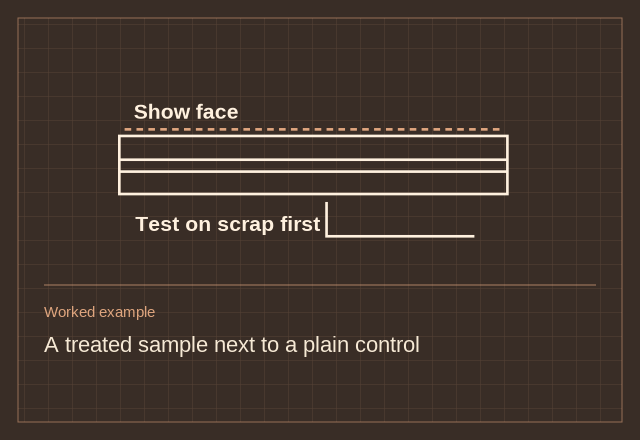
At the bench
Get two scraps that actually compare
Adjacent offcuts from the same board give you a more useful trial than two pieces from the same species label. Match the grain direction and final prep. Label one as the control and one as treated. If you change the paper, the color or how long you leave on the stain, you cannot easily tell which step changed the appearance. Keep those variables aligned where the system permits.
Read the conditioner instructions with the stain instructions
Find the application schedule for the exact products. A conditioner intended for one stain system is not a universal undercoat. Check both labels for compatibility and timing. Set up the treatment and staining tools before you start so you can honor any application window. If your labels disagree, ask the manufacturer about that specific combination.
Look for patches as well as lightness
Turn the samples under steady room light and then in a lower-angle beam. Ask which one has the evenness you wanted. A sample can look more uniform because the color is lighter overall. If you prefer a deeper look, test a different approved shade on a third scrap instead of assuming another coat will solve the first sample’s issue.
Separate finish effects from wood features
Note the places where grain figure already changes tone on bare wood. Those changes may remain after conditioning and can be desirable. Moving a show face to another part of the board is also a valid design choice. Photograph your final pair for your own reference if helpful, and write the product names and sequence on the back.
Keep the conditioner question separate from the grit question
Set up a second pair if your first birch samples show that the result still depends on how the grain was prepared. This time, hold the approved conditioner and stain schedule steady and compare two surface preparations the makers allow. Orient both samples alike and keep the parts’ future show direction marked. Read the cured color from the front where the book rest will stand. If the change is confined to the stained end, that is a different problem from patchy color across the face. Record which prep and which conditioner changed the face so you can reproduce the selection on a longer board.
Practice on a plan
Finished dimensions in width × depth × height order.
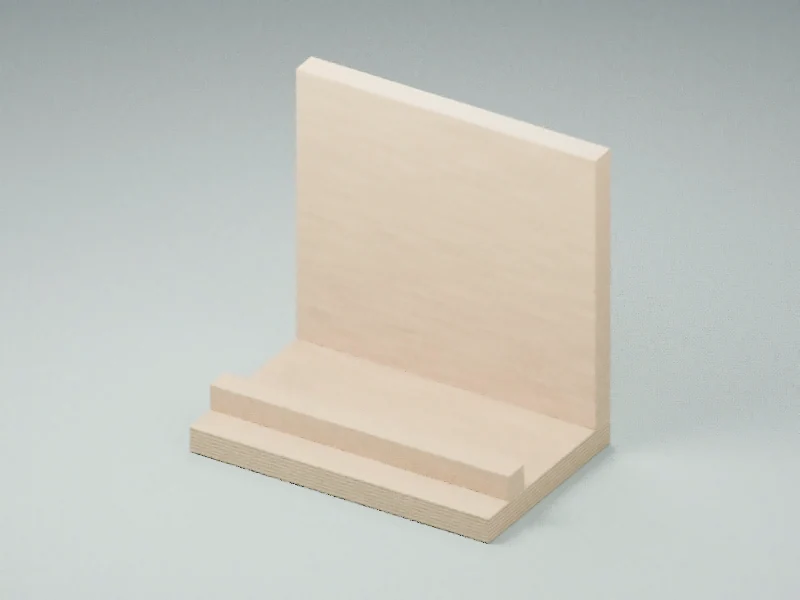 Birch Book Stand for Small HardcoversFinished size · 9 × 6 × 8¾ in.
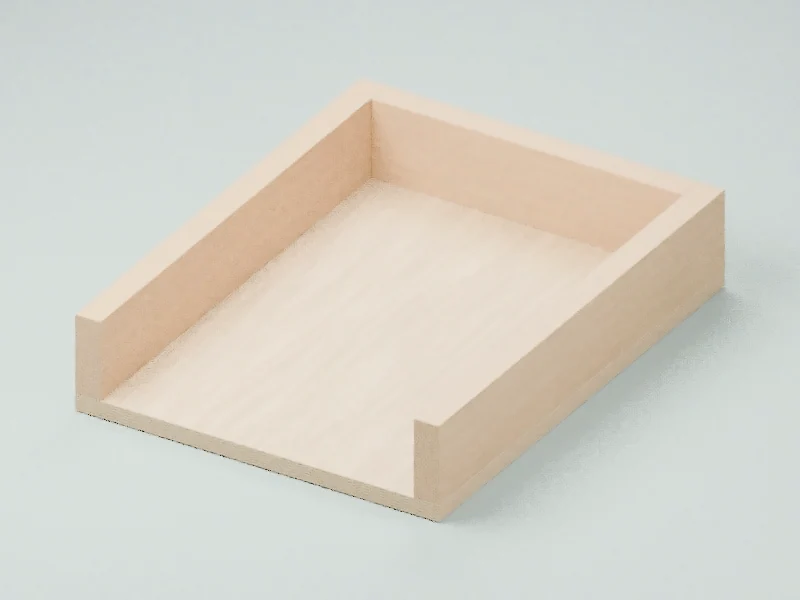 Open-Front Wooden Paper Tray for US LetterFinished size · 10½ × 13½ × 2¾ in.