Fasteners and glue · 2 min read
How to Leave Screwdriver Access in a Small Wood Assembly
How can I tell whether I will be able to reach a screw after assembly?
Offcut Journal editorialUpdated
Short answer
Place your actual driver where the screw axis will be and trace its entire reach. Include the handle, the working angle, and the space your hand needs. A screw head can be in plain sight while nearby rails keep the bit from seating. The same rehearsal should tell you whether you can back the screw out later.
At the bench
Trace the approach, not just the gap
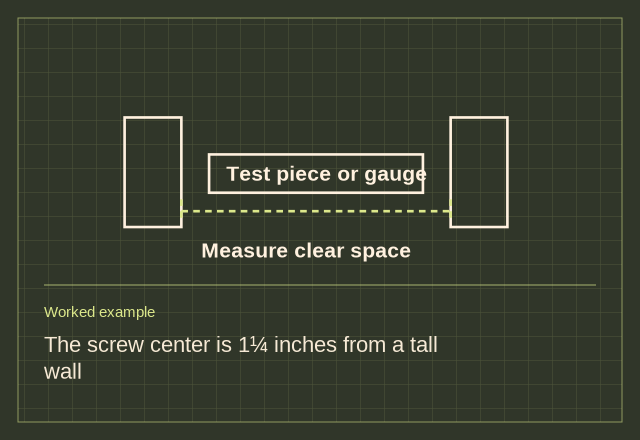
A driver must approach the head along the fastener’s axis. Measure the space in that direction. On a project that will have a lip or divider above the screw, check where the bit first enters the opening. A tool that works in a wide sample can meet a second obstruction in the finished box.
Plan which face is open longest
Sometimes the plan makes a short rail easy to screw in before the floor goes on. Add that order to the working copy. If the part is intended to be removable, go back and check its screwdriver access again with every neighboring piece installed in the mock-up.
Check the exit travel
A loosened fastener rises along its axis. Keep following the head until it clears the piece it holds. Ask whether the top, divider, or frame will stop it halfway out. If your design calls for a captive fastener, measure the amount it has to retract to release the part.
Account for your bench position
Put the prototype somewhere you can support it and see the screw head at the same time. Take the depth of any shelf or cabinet into account if it will remain there during service. A driver that clears an open bench can contact the back wall when the same project is put away.
Check the space an extension gives back
With the sample screw 1¼ inches from the wall, set a longer manual driver or compatible extension on the mark and note what moved out of the cramped area. The shank may fit low beside the wall while the handle moves above its top. Add the real bit holder to the mock-up because it is often wider than the bit itself. Rehearse seating, turning, and lifting the whole tool away without power. If the assembly still blocks access at the moment you need it, return to the build order. A longer tool may also be hard to use where a shelf above the project limits your reach.
Practice on a plan
Finished dimensions in width × depth × height order.