Measuring and layout · 2 min read
How to Trace Portafilter Lugs Before Cutting a Tamping Dock
How should I measure a portafilter for a wooden tamping dock when the locking ears stick out?
Offcut Journal editorialUpdated
Short answer
Mark the round body, the outer reach of the locking ears, and the handle axis at the height where the dock will bear. Check by setting the empty portafilter on a supported card model. Use the actual outer shell and protruding parts to establish those marks.
At the bench
Choose the bearing surface from the actual utensil
Set the empty portafilter on labeled scraps to see where the utensil will sit. Locate any flat underside or intended wood contact called for by the plan. Trace the outline at that level with pencil marks on the card. Keep the sides of the shell and the basket’s open rim separate in your notes. They may sit at different diameters.
Mark the lugs as direction changes
Draw radial marks from the center toward each lug, then trace its edges and tip. Label the handle line. Set the portafilter in your usual orientation and note whether the handle is parallel to a front edge or offset from it. A round drawn recess can clear the body and still interfere with a lug when you set the utensil down at a slight angle.
Build a supported mock-up
Use solid scraps together with the card outline for reference. Set the utensil down gently and observe whether the handle, spouts, or lugs contact the bench or either riser. Trace close points and revise the sample shape. Keep the model separate from a working dock, and reserve normal tamping pressure for the installed, stable support appropriate to your equipment.
Keep the handle off the wrong side of the mark
Lay out a permanent centerline on the wood, showing which way the handle points in normal use. Compare clearances after any small change to the width or pad thickness. If you have two portafilters, make a separate paper trace for each. Share the same dock only if both seat correctly without depending on a projected lug as an accidental bearing point.
Check how much of the outline a shaped stop needs
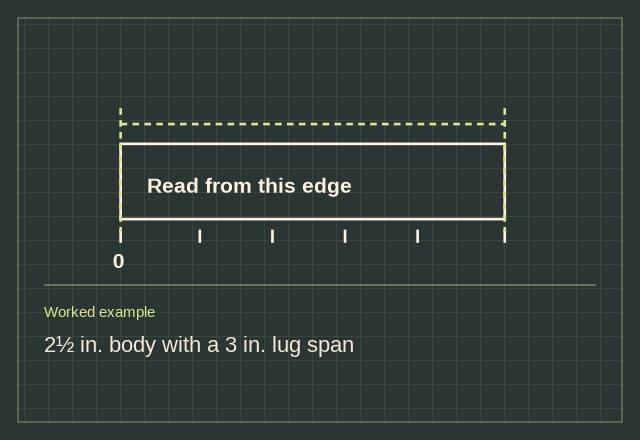
The 3-inch lug span in the example is the outside width across both lugs. Before drawing a wide clearance shape through the whole dock, trace only the edges that pass each proposed stop. Set the card over the supported mock-up and place the empty utensil from slightly to either side of your normal approach. Turn it gently to center the handle, then mark where the lug first comes close. This trace indicates whether a small local relief will give enough room while leaving broad bearing surfaces intact. Check that the lugs still float clear and the shell lands on the intended support after the outline changes.
Practice on a plan
Finished dimensions in width × depth × height order.