Choosing stock · 2 min read
Hardboard vs. Thin Plywood for Removable Dividers
Is hardboard a suitable substitute for thin plywood in a removable divider?
Offcut Journal editorialUpdated
Short answer
Compare the job each sheet has to do. Hardboard can provide a smooth, thin separator for light items in a dry space. Thin plywood is an alternative if the edge is handled often or the panel needs support through its layered construction. Keep the material specified by a plan where the part holds other pieces in position.
At the bench
Check the face that will touch the contents
Some pieces have two smooth faces and some are textured on one face. A rough side may grab soft paper or fabric in a slot. Slip a piece of old card alongside the proposed panel under light pressure. If it catches at the edge, consider where the panel will face or use the smoother piece.
Hold the blank how the project holds it
A panel that seems rigid against the bench may bend when standing only along its bottom. With the setup supported safely, hold a small candidate in the orientation you intend to use and slide the ordinary contents beside it. A thin sheet can work as a separator even when it would be unsuitable as a base or structural lip.
Leave room for taking it out
The top of a removable divider needs a usable lift point, and its edges need to travel through the opening. Check the part beside the neighboring dividers rather than testing the empty slot by itself. A high divider that can flex or snag as it lifts may need a shorter profile or a different material in this specific use.
Keep mixed stock identified
Thin hardboard and plywood look similar at a distance once stacked flat. Label each sheet's intended use, actual thickness and best face. Keep the original material category next to any geometry notes on the plan. If a substitution changes the slot width, record that change explicitly before cutting guides for the rest of the set.
Measure the intrusion into the neighboring compartment
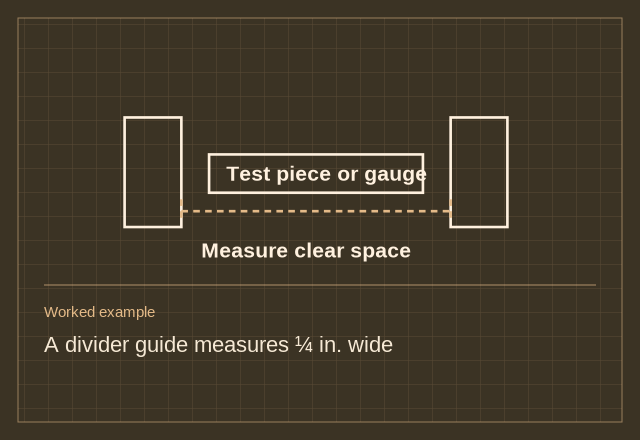
A nominal ¼ in. guide holding an ⅛ in. separator can let the top lean farther than the slot appears to allow. Place the normal contents in both adjoining compartments and measure the closest point between the divider and each item. Lift the divider with a normal grip, without clearing a bay first. If it snags one folder or pinches your fingertips, compare a full-height plywood trial divider using the same contents. That check shows where lean, height, or fit is costing usable room. Changing guide width to suit the thinner panel still leaves the height and access questions to solve.
Practice on a plan
Finished dimensions in width × depth × height order.