Fasteners and glue · 2 min read
How to Fit Two Cleats Around a Lift-Out Divider
How do I keep a wooden divider loose enough to lift out between two cleats?
Offcut Journal editorialUpdated
Short answer
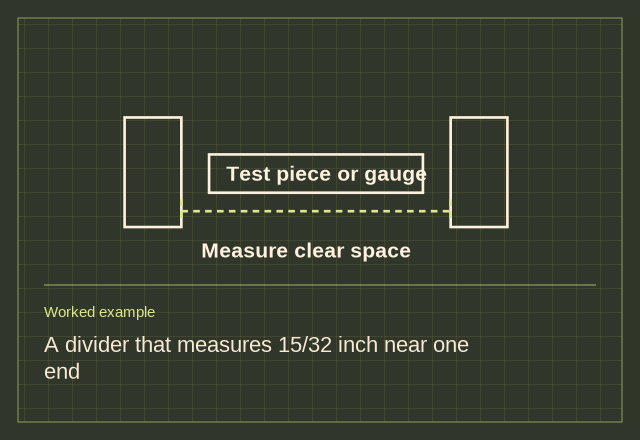
Set the cleat spacing with the item that will actually lift out. Compare its thickness near both ends, and use a separate setup gauge when the cleats need fastening or glue. Check the removal motion with the rest of the compartment mocked up so you can keep working room for your fingers.
At the bench
Make the channel with two references
Place both cleats on the same base and mark where each one meets it. Check the width at the front and back, then compare those marks with the angle of the divider. A consistent pair of markings makes it easier to restore the fit when one cleat moves for fastening.
Think about slide path and handhold separately
A divider that clears both cleats on the workbench can still be hard to lift in a narrow box. Stand the walls and nearby parts in scrap. Use the same grip you expect to use once the bin is occupied, and check where the rigid piece passes the closest rail.
Keep adhesive away from the gauge
A scrap gauge can represent the divider without risking the actual moving piece. Rehearse putting it in and pulling it out before fixing the cleats. If your process uses glue, follow its instructions and choose an order that leaves access to check both sides of the channel.
Record the fitted orientation
Label the underside or a hidden edge of the removable divider and mark the face of each cleat that sets its position. Put any clearance measurements on the working copy. That makes a future replacement easier to trace from the same two faces. Include a discreet mark for the front edge. Keep it where you can see it from above when the divider is halfway into the channel.
Check whether the cleats lean inward at their tops
When the 15⁄32-inch end of the sample clears at the base but binds during the lift, take the divider out and compare the two cleat faces in section. Use a small square to see whether either cleat tips toward the center. Then compare the clear distance at both heights with the same scrap gauge. A channel can have the intended bottom width while its tall edges pinch a panel higher up. Verify that the cleats sit the same way after fastening and that a finished scrap still follows the release path. Correct the seating face before shaving down a divider that already has the right thickness.
Practice on a plan
Finished dimensions in width × depth × height order.