Fasteners and glue · 4 min read
How to Fit a Replaceable Leather Pull to a Wooden Part
How can I attach a pull tab so I can replace it later?
Offcut Journal editorialUpdated
Short answer
Decide how the old pull will come out before you attach a new one. If the strap passes through a slot, the folded end needs room to travel back through the opening. If a removable fastener holds it, leave space to reach and remove both sides of the hardware after assembly.
At the bench
Use the working face as a boundary
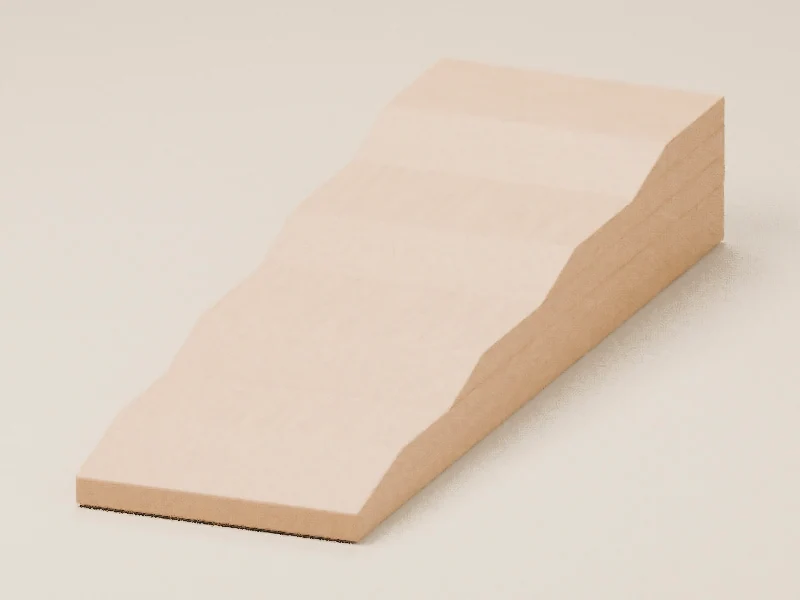
On a doorstop, identify the faces that contact the door or floor and keep the pull and attachment clear of them. In a tote, map the nearby dividers or bottom. Rehearse with a mock side that shows where the strap exits and which surfaces it can touch in ordinary use.
Measure a folded sample as installed
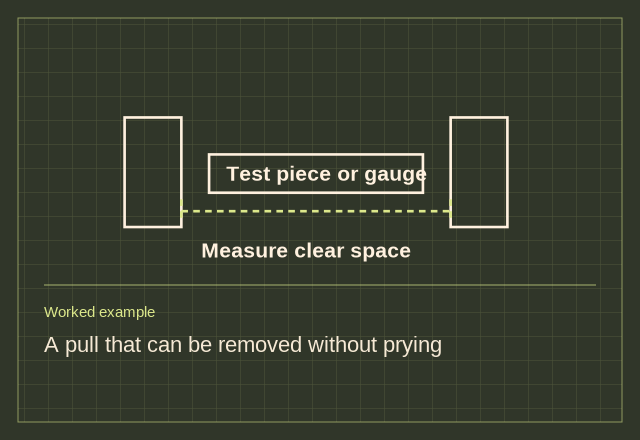
A single thickness of leather does not describe a doubled section or a folded tab. Check the widest folded portion that has to pass through your gauge. Confirm it can also seat or hold in the intended position with the plan’s proposed retention. Keep any strap bend distinct from the space the attachment requires.
Plan how you will replace it
Imagine removing the strap when the piece is fully fitted. Use the same route in the mock-up. Verify that you can reach any access side and withdraw the old strap without dismantling a permanent joint or levering against a delicate finish. Make a note if the design relies on a removable neighboring part.
Try the work with a paper reference
Trace the grip and the fully extended pull on paper. Use that outline to fit the project to nearby edges or to a storage box before finishing the wood. If you change the pull length, revisit those clearances as well as the attachment.
Choose where the attachment opens
For a slot with an inside retainer, start by finding the access side. A simple removable retainer works only while you can reach behind the wood and bring it back out. For a screwed attachment, check that your hardware can be disassembled without rotating the entire leather pull or scratching a finished face. Screw posts are one option when both faces are accessible. Tandy specifies removable threaded posts in several sizes. Dimensions and suitable grip ranges differ by product. Use the hardware drawing for the actual post instead of choosing a screw by the leather thickness alone.
Rehearse the full thickness of a fitted stack
A flat strap that looks thin on a ruler can get thick once two ends overlap. If an example assembly has a ½ in. wooden side and two 1⁄16 in. leather layers, that stack already measures ⅝ in. before any washers or recesses. Measure the trial stack in the place the hardware will clamp it. A barrel that bottoms out can feel tight at the driver while the pull remains loose. Test the complete hardware on matching scrap and select the fastener to fit the measured assembly, using the maker’s grip and installation information.
Keep the pull out of the doorstop’s working surfaces
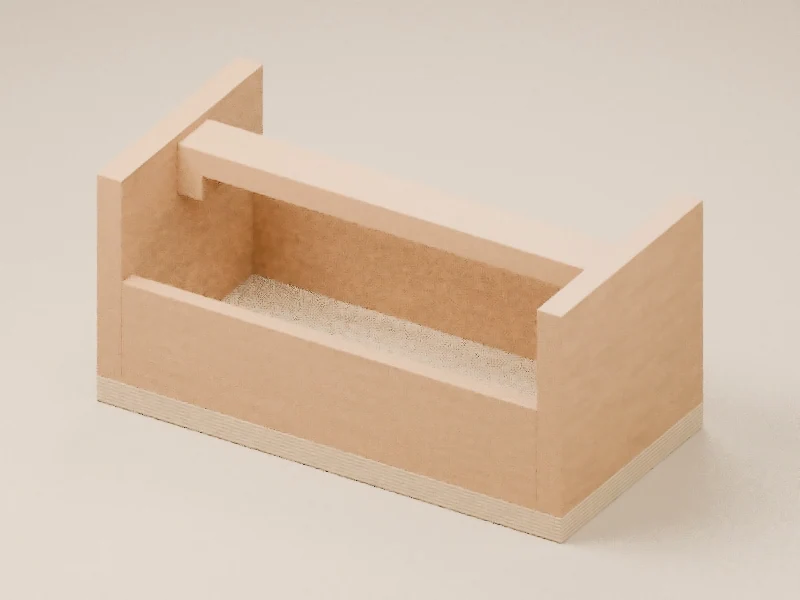
The companion stepped doorstop plan uses short flat webbing. If you are mocking up a leather variation, keep its fold and fastener out of the floor contact and the path of the door. With the doorstop at rest on a flat surface, check whether the leather lifts the tail or trails into a walkway. The companion shoe-care tote uses a fixed wooden handle. A small leather access tab is a separate fitting. Keep the original carrying handle and its specified attachment.
Change the retainer if the trial cannot be serviced
If the strap pinches against the back of a drawer, bring the removal route toward an open end or choose a fastener you can reach from the accessible side. If the leather catches at the mouth, inspect the installed fold and the slot edge separately. Try a spare of the same leather and run it through the full replacement path. Write down the strip width, thickness, orientation and hardware model. A future strap may have the same width and still bend differently at the fold.
Test the bend using the leather you intend to keep
Two straps with the same measured thickness may fold quite differently near the retainer. For the doorstop, copy the proposed opening and the nearby contact face into a piece of scrap. Feed in a short piece of the actual leather, put it into its retained shape, then see whether it can relax without lifting the sample off the reference surface. Pull it back toward its service opening and check whether the fold catches. The loose strip’s width tells you whether it starts into the gauge. This second rehearsal shows how the installed fold behaves where the wood restricts its bend.
Practice on a plan
Finished dimensions in width × depth × height order.