Sanding and finish · 2 min read
How to Compare Wood Stain Under Daylight and Room Light
Why does my stain sample look different in the room than it did at the bench?
Offcut Journal editorialUpdated
Short answer
Evaluate completed finish samples in the intended room under at least its usual day and evening light. Set each one in the same orientation as the project. Use the actual neighboring materials rather than relying on a color name or bench lighting.
At the bench
Use an offcut that carries enough surface information
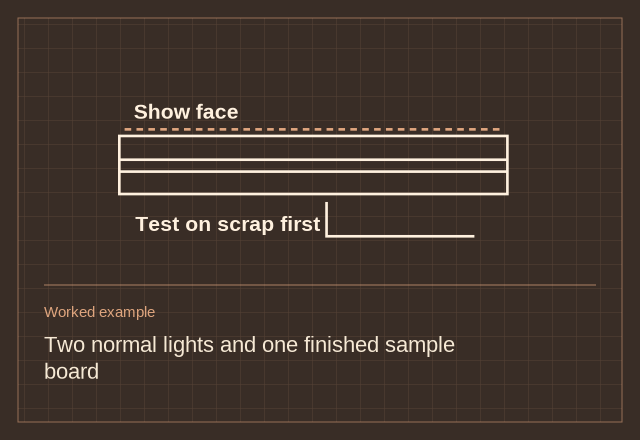
A tiny stain dot tells you the color in a single patch. A larger piece shows how the grain and finish look together. Select material that resembles the real show face, and include a visible edge where that matters. Label the sample on the back so its writing does not interrupt the visual comparison. Match the position of the sample to the real piece.
Keep the samples at the same distance and angle
Stand two samples against the same backdrop and view them from one place. Switch their positions before drawing a conclusion. A sample next to the lamp may seem brighter simply because of its location. If one will be a horizontal surface, give it the same upward angle as the final object and consider reflections as part of the result.
Include the entire finish schedule
An exposed stain on raw wood is useful for screening the first color choice. The comparison you live with includes the coats over it. Let the actual sample system reach the condition the products describe before making a decision. Record the preparation, stains, topcoat and final sheen on the back so the test can be repeated without guessing.
Put practical care beside appearance
If two samples look good, use the intended use and recommended care to break the tie. A piece near a tabletop in regular use has different demands from one behind a display. Keep the sample as a future reference, but recognize that light and wear later change the appearance of wood and coatings. Reevaluate the real boundary when replacing a part.
Make one last comparison with the room in normal use
A placemat file changes appearance once it holds a full stack. Set both finished sample boards near a dry mock-up with the fabric, placemats, or boards you will actually store. Keep the same sample edge forward when you switch from daylight to task lighting. Look for which surface seems to lead the color, the rim or the contents. Distant bare-wall comparisons can miss a blue or red cast from the items leaning against the wood. Keep a quick note of the sample and light you picked, especially if your evening choice differs from the daylight one. That decision is hard to reconstruct after the room changes.
Practice on a plan
Finished dimensions in width × depth × height order.
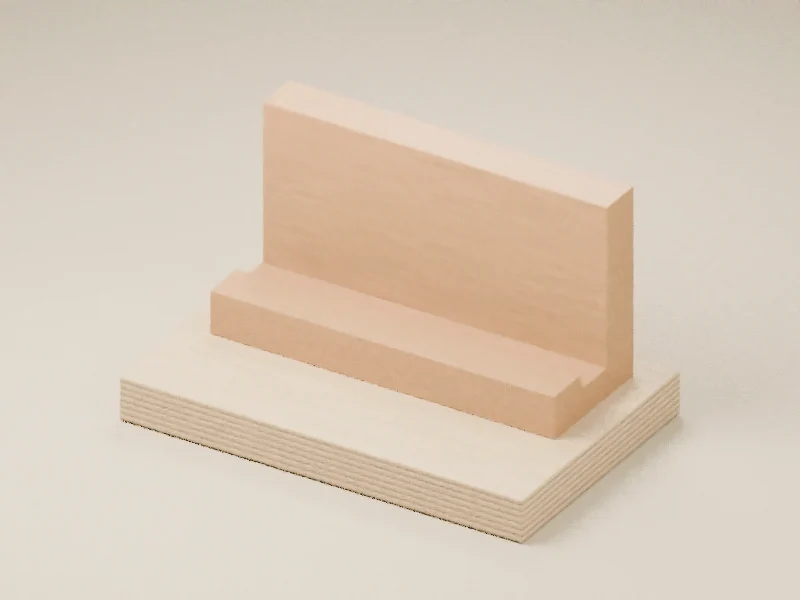 Wooden Recipe Card Stand for 3 × 5 and 4 × 6 CardsFinished size · 7 × 4½ × 4 in.
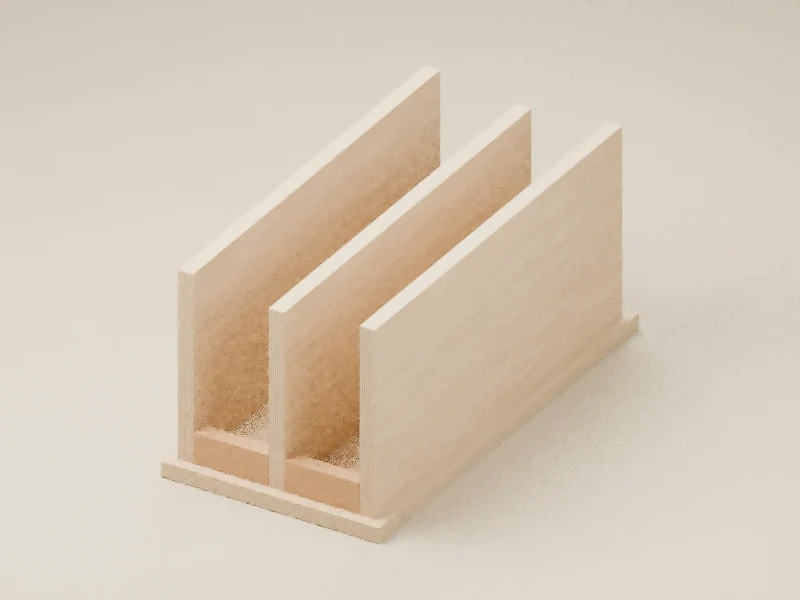 Two-Bay Wooden Placemat OrganizerFinished size · 10½ × 20½ × 9¾ in.