Fixes at the bench · 3 min read
Why eyeglass lenses touch a wooden cradle
Why is one lens touching the cradle when the glasses appear to fit?
Offcut Journal editorialUpdated
Short answer
A frame can rest on a hinge or on one folded temple and roll toward the opposite lens. That can happen with only one pair because the frames or lenses project differently in profile. Work with clean surfaces and lift the glasses away when they touch. Establish the three points carrying the frame while it sits, then find which of them changes as you pull it toward the front opening.
Find the cause
Look at the frame without the cradle
Support the glasses lightly over a clean cloth and look from the front and ends in strong side light. Locate the lowest projecting parts when folded. Compare the two temples and hinges. Gently change which temple folds first if the frame is designed to allow that. The side resting on the outside can add enough height to tip the frame.
Look for an actual mark of contact
Before putting the glasses down, place a clean, narrow paper strip on the wood under the bridge area. Lower the frame and see where the strip is trapped. Repeat near each lens. A strip caught beneath a lens points to contact even when the edges are hard to see. Lift the frame to release the paper so you avoid dragging it over the lens.
Watch the first inch of retrieval
Take the glasses by their frame and lift. Mark where your fingers reach into the drop front and whether you have to tilt the glasses to get a grip. If a lens only touches during that tilt, a slightly different placement or a direct upward grasp may solve the reason you notice the rub. Try your everyday grip from the usual side of the table.
Set a soft support under a frame point
If you add a pad, use something clean, stable and easy to lift out for cleaning. Position it under the bridge or temple segment that can carry the frame without twisting it. Keep adhesive and loose fibers away from the lenses. Repeat with every pair that uses the cradle, since a pair with different hinges may rest on a different point.
Test the shape retained after adding a removable lining
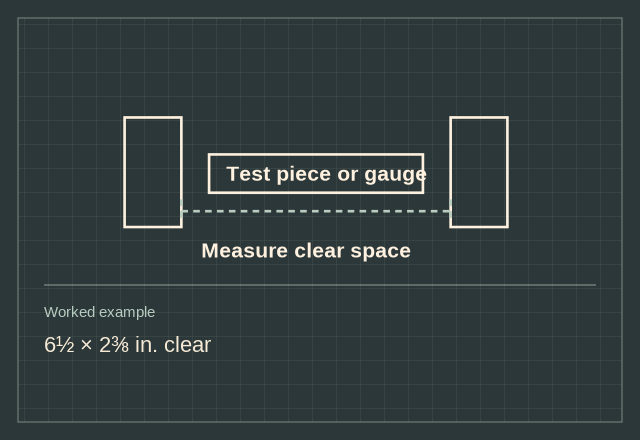
A full lining softens the surface where the glasses land but can use up some of the 2⅜-inch depth if its edges turn up. Make a trial with clean smooth material and check the profile while you still support the glasses above it. If a raised edge meets a lens before the frame reaches its support, stop and try a different shape. A small pad that bears under the frame may leave more room for the lenses. If you use a pad that lifts out for cleaning, check its seating every time you refit it. A piece that curls or walks toward the opening needs a more stable arrangement.
Practice on a plan
Finished dimensions in width × depth × height order.