Choosing stock · 3 min read
How to Choose Stock for a Loose Solid-Wood Insert
Can I use solid wood for a loose insert that sits inside a tray or stand?
Offcut Journal editorialUpdated
Short answer
A shallow dry-use accessory can use a known solid wood insert when its opening permits movement and a loose fit. Measure across the grain, check the actual minimum opening, and keep an accessible removal path. Use the plan's specified stock if the insert must retain a tight, repeatable fit.
At the bench
Identify the kind of fit at stake
A loose liner that merely collects crumbs has different needs from an adjustable spacer that helps control an object's position. Read what touches the insert at normal use and how the object is lifted away. If the insert protects something from water or serves a safety-related positioning role, follow the specified material and dimensions. A decorative dry insert can often be lifted out and replaced if it changes size.
Mark the cross-grain dimension
Lay the piece out at final size and draw a line across the fibers on the back. That dimension commonly changes more across seasons than its along-grain length. Growth ring orientation, species and the normal moisture range affect the result. Verify the source and intended storage conditions and keep the insert away from pooled water. A published average is a starting point for planning movement in identified wood.
Measure below the top edge
Check the opening at both ends and the bottom, and compare its diagonal corners with the actual insert in its intended position. An inside seam, pad, or painted buildup can make the lower opening less generous. Measure any clearance affected by a shaped or rounded corner. Test lifting the piece with the stand assembled and the object removed. A shallow finger recess or pull feature shown by the plan can keep the insert usable when the amount of free travel changes.
Confirm the fit in ordinary use
Dry check with stock that has acclimated to the intended room and keep both components in that room. See whether the loose insert can move by hand in the opening. Recheck after a normal seasonal change if you plan to rely on a close fit. Preserve a saved, measured strip of the original stock in the shop records so a misfit can be investigated or a replacement made without guessing.
Calculate the per-side clearance only for a centered insert
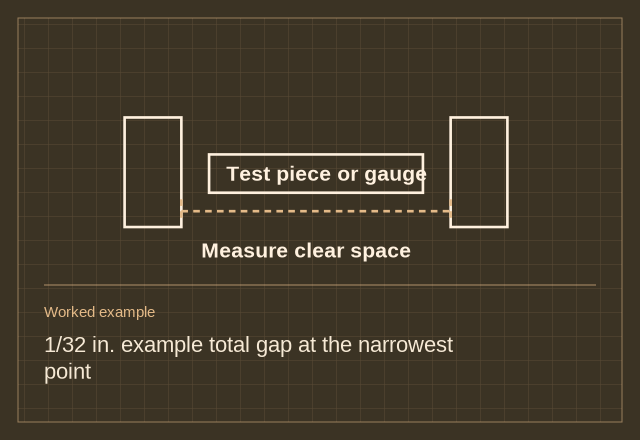
In the example, a total gap of 1/32 inch would leave just 1/64 inch at each side if the insert were perfectly centered. You can still find the full 1/32-inch gap at one edge when the other edge touches. Note which reading you took before ordering a replacement. Place the insert against one side, verify the remaining gap where the opening is narrower, and then try lifting it from the position your hand can reach. The computation records current clearance. Compare it with the plan and the expected movement of your actual stock before counting on a removable fit.
Practice on a plan
Finished dimensions in width × depth × height order.