Fixes at the bench · 3 min read
Why a cassette insert catches as the drawer closes
Why do my cassette cases fit in the organizer while the drawer is open and catch only when it closes?
Offcut Journal editorialUpdated
Short answer
A drawer’s usable height can be lower at the cabinet opening than it is at the back of the box. A cassette case can also look seated while its hinge rides on a divider or a label folds under one corner. The order of checks matters. First establish that the bare drawer closes, then that the empty insert clears, then identify the tallest occupied bay with the cases settled where you intend to store them.
Find the cause
Locate the first resistance with a paper flag
Tape a paper flag lightly to the visible top of one suspect case, with the free end sticking above it. Close slowly while watching from the front and open as soon as the paper bends. Move the flag between the front and rear bays. Watching the distance traveled before it folds helps locate a frame lip, a lower screw head or a shallow underside farther back.
Measure the drawer along its route
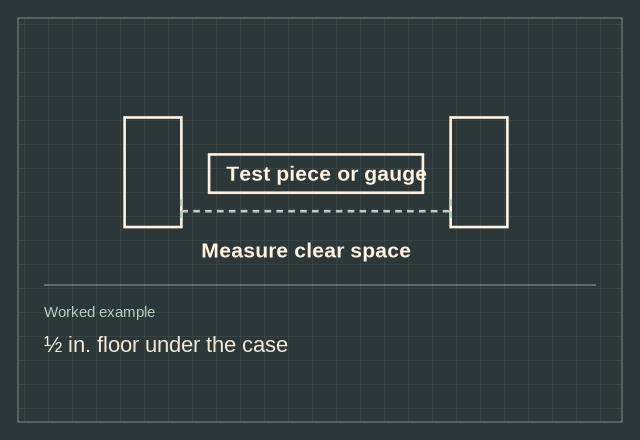
Remove the insert. With the drawer partly open, compare the vertical distance from its floor to the obstruction at the marked location. A small stack of measured scrap is an easy way to see the clearance if the ruler cannot stand upright. Keep fingertips away from the closing gap and withdraw the drawer to retrieve the gauge.
Look underneath the high corner
With the drawer fully open, press lightly on each corner of the case. If it alternates between two positions, lift it out and look for a hinge, a loose label or a ridge of finish on the interior floor. Compare a plain case in that bay. If both cases sit high in the same corner, observe all four pocket faces before altering the insert.
Change the bay assignment or lower the stored profile
If the problem follows a single oversized case, group the taller ones in a confirmed taller stretch of the drawer or move them to another organizer. If the drawer is shallow along the entire route, revisit your insert floor thickness and material before cutting. A lower floor still needs enough material for the insert to stay intact when lifted out.
Check a case that travels up as the drawer moves
An 11⁄16-inch case leaves 1⁄16 inch of headroom in the worked example only if it stays flat throughout closing. Put an empty case in the bay where the catches start. With the drawer open, put a narrow low-tack witness mark on the case next to a corresponding mark on that bay. Ease the drawer toward the obstruction and open it again. If the marks separate after ordinary movement, look for a floor slope, a loose insert, or a snug corner that makes the case climb as it moves. Rehearse normal drawer travel with an empty case before returning tapes to that pocket. A fixed height gauge alone cannot catch this movement.
Practice on a plan
Finished dimensions in width × depth × height order.